The short answer
- These funds hold companies, not coins. You get operating leverage to the bitcoin price plus genuine business risk on top.
- Two of the three dedicated mining funds are pivoting to AI. WGMI changed strategy on 11 August 2026; MNRS is expected to follow around 15 September.
- LEGR holds no crypto-native company in its top ten. It is a global technology and financials fund with a blockchain index behind it.
- BKCH is the cheapest at 0.50% and the purest crypto beta, with the top ten taking 70% of the portfolio.
- Fees span 0.50% to 0.85%. That 35-basis-point range is irrelevant next to the difference in what these funds actually do.
These funds hold companies, not coins
That sentence is the whole page, and everything else follows from it. A spot Bitcoin ETF owns bitcoin and tracks its price, minus a fee. A mining ETF owns equity in businesses that convert electricity into hashrate and hashrate into bitcoin, and whose share prices respond to the bitcoin price with amplification in both directions.
The amplification is not magic. It comes from operating leverage. A miner's costs — power contracts, machine depreciation, hosting agreements, staff — are largely fixed in the short run, while revenue moves directly with the bitcoin price and inversely with network difficulty. When bitcoin rises 25%, as it did during August 2026, margin expands faster than revenue and the equity can move several times as far. When bitcoin falls, the same arithmetic runs backwards and the fixed costs stay exactly where they were.
On top of that sits real business risk that has nothing to do with bitcoin. Energy costs vary enormously by jurisdiction and contract structure. Hashprice — revenue per unit of hashrate — compresses steadily as the network grows and step-changes downward at every halving. Miners fund expansion by issuing shares, which dilutes existing holders in a way no ETF holder ever experiences directly. And management quality genuinely differentiates outcomes in an industry where capital allocation decisions have four-year consequences.
None of that makes these funds bad. It makes them a different instrument with a different job. If your view is simply "bitcoin goes up", the cleanest expression is a fund from the US spot Bitcoin ETF list. If your view is "bitcoin goes up and the businesses built on it are undervalued relative to that", these funds express something a spot ETF cannot.
The mining and crypto equity ETF list
Nine funds, ordered by size. Read the holdings column before the fee column — the difference in what these portfolios contain dwarfs the difference in what they cost.
US-listed crypto equity and mining ETFs
Expense ratios are the stated net figure. Holding counts as most recently disclosed.
| Ticker | Fund name | Issuer | Exchange | Fee | Assets | Holdings | Launched |
|---|---|---|---|---|---|---|---|
| BLOK | Amplify Blockchain Technology ETF | Amplify | NYSE Arca | 0.70% | $1.07bn | 53–57 | 17 January 2018 |
| BITQ | Bitwise Crypto Industry Innovators ETF | Bitwise | NYSE Arca | 0.85% | $420m | 35 | 11 May 2021 |
| DAPP | VanEck Digital Transformation ETF | VanEck | Nasdaq | 0.52% | $347m | 22 | 12 April 2021 |
| BKCH | Global X Blockchain ETF | Global X | Nasdaq | 0.50% | $265m | 35 | 12 July 2021 |
| WGMI | CoinShares Bitcoin Mining and Digital Power ETF | CoinShares | Nasdaq | 0.75% | $230m | ~30 | 7 February 2022 |
| LEGR | First Trust Indxx Innovative Transaction & Process ETF | First Trust | Nasdaq | 0.65% | $130m | ~100 | 24 January 2018 |
| MNRS | Grayscale Bitcoin Miners ETF | Grayscale | NYSE Arca | 0.59% | $11m | 27 | 30 January 2025 |
| SATO | Invesco Alerian Galaxy Crypto Economy ETF | Invesco | Cboe BZX | 0.66% | $8m | 60 | 7 October 2021 |
What is actually inside each fund
The top five positions decide most of the behaviour in portfolios this concentrated.
| Ticker | Crypto purity | Top five holdings |
|---|---|---|
| BLOK | Broad | Figure Technologies 4.5%, Robinhood 4.0%, Galaxy Digital 3.8%, Opera 3.4%, Cipher Mining 3.4% |
| BITQ | High | Coinbase 12.2%, Strategy 11.0%, BitMine 7.0%, IREN 6.8%, Figure 5.2% |
| DAPP | High | Block 11.1%, Coinbase 8.6%, BitMine 7.7%, IREN 6.7%, Circle 6.6% |
| BKCH | Highest | Coinbase 13.8%, Circle 12.5%, BitMine 10.0%, IREN 9.6%, Galaxy Digital 4.9% |
| WGMI | Miners | Cipher Mining 16.4%, IREN 13.1%, Hut 8 10.3%, Keel 8.2%, CleanSpark 4.8% |
| LEGR | Very broad | AMD 2.9%, Micron 2.8%, Intel 2.4%, Samsung 1.8%, Infineon 1.7% |
| MNRS | Miners | IREN 16.1%, Hut 8 11.6%, Applied Digital 10.1%, SBI 4.6%, Nvidia 4.5% |
| SATO | Mixed | Tiered weighting across 60 names; may also hold crypto ETPs directly |
Ranked by what they actually hold, not by what they are called
Sort these funds by crypto sensitivity rather than by name and a clear ladder appears, running from concentrated hashrate exposure at one end to something barely distinguishable from a global technology fund at the other.
At the pure end sit the miner funds: WGMI and MNRS. Before its mandate changed, WGMI's top ten as of 13 August 2026 was Cipher Mining at 16.35%, IREN at 13.11%, Hut 8 at 10.30%, Keel at 8.22%, CleanSpark, Riot, HIVE, MARA, Digi Power X and Bitdeer — 73.42% of the fund in ten names, and no Coinbase, no Strategy, no Circle anywhere. That was the cleanest hashrate exposure available in an ETF wrapper. MNRS ran the same idea at a twentieth of the size with 27 holdings.
One step out are the crypto-native funds that blend miners with exchanges, custodians and stablecoin issuers: BKCH, BITQ and DAPP. BKCH is the most top-heavy of the three, with Coinbase at 13.75%, Circle at 12.54%, BitMine at 9.97% and IREN at 9.61% as of 1 September 2026, and the top ten taking 70.08%. Its index applies a three-tier priority that pushes weight toward companies earning at least half their revenue from blockchain, which is why it reads as the purest crypto beta of the group despite being the cheapest. BITQ and DAPP are similar in spirit — DAPP is the most concentrated by count, holding just 22 names with the top ten at 63.80%.
Broader again is BLOK, the largest fund in the category at roughly $1.07bn on 1 September 2026. It is actively managed across 53 to 57 holdings, its top ten takes only about 35%, and roughly 9.6% sits in cash and near-cash. That diversification makes it the least crypto-sensitive of the majors, which is a feature if you want the theme without the whiplash and a bug if you bought it expecting miner-like beta.
And then there is LEGR, which sits in a category of its own. Its top ten as of 31 August 2026 was AMD at 2.85%, Micron at 2.84%, Intel at 2.37%, Samsung at 1.79%, Infineon at 1.69%, Mitsubishi UFJ at 1.66%, Morgan Stanley at 1.66%, Salesforce at 1.55%, Microsoft at 1.51% and Amazon at 1.49%. Not one crypto-native company. In practice LEGR is a diversified global technology and financials fund tracking a blockchain-adoption index, and it should never be placed in the same table as WGMI without that caveat attached. Someone buying LEGR for bitcoin exposure has bought something else entirely.
What we would actually watch
Read the holdings file, not the fund name. Every fund on this page carries a label suggesting crypto, and the actual crypto sensitivity varies by something like an order of magnitude across them. The test we would apply is simple: add up the weight of companies that would be in serious trouble if bitcoin halved. For BKCH that number is most of the portfolio. For LEGR it is close to nothing. That single calculation tells you more about how a fund will behave than its expense ratio, its holding count and its marketing copy combined. Do it again after any strategy change — as WGMI's holders now need to.
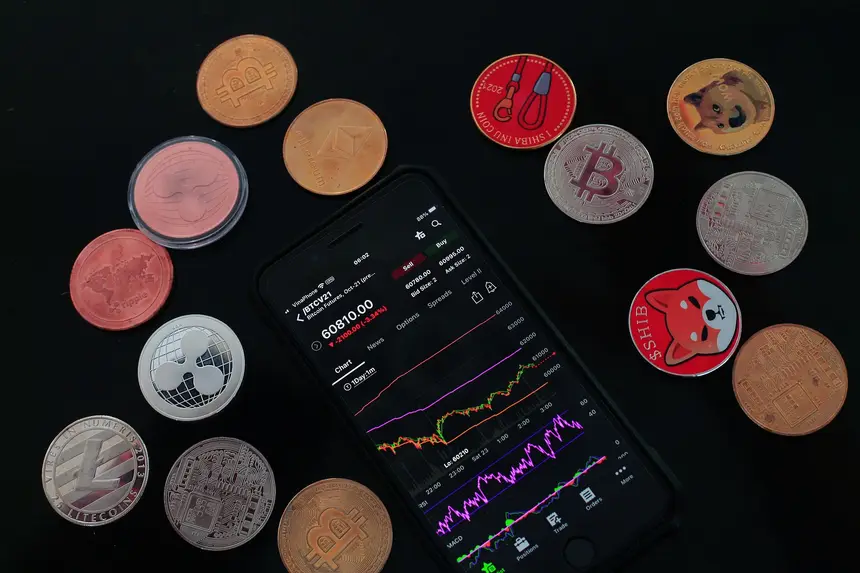 Equity beta, not coin exposure
 Two of the three dedicated mining funds are pivoting to AI
This is the most important current development in the category, and it happened inside a thirty-day window.
WGMI changed strategy on 11 August 2026. The fund now commits at least 80% of net assets to what it calls "Bitcoin Mining and Digital Power Companies" — a much wider universe than the name it launched with. That definition covers hyperscale data centres, AI and data-centre semiconductors, power and energy infrastructure, and high-performance and quantum computing. It was renamed the CoinShares Bitcoin Mining and Digital Power ETF on 18 August 2026 to match.
MNRS is expected to become the Grayscale AI Compute ETF around 15 September 2026. Same direction, different issuer, three weeks apart.
Two of three repositioning inside a month is not coincidence. It is a category-level shift, and the commercial logic behind it is obvious: bitcoin miners already own power contracts, substations, cooling and racks, which are exactly the assets an AI compute buildout is short of. Several listed miners have been converting capacity to AI hosting for real revenue. The funds are following their own holdings.
Say plainly what this means for anyone holding WGMI as a hashrate proxy: it is no longer clean hashrate exposure, and the position needs to be re-underwritten. The holdings file that showed 73% concentrated in miners predates the strategy change. A fund that can hold AI semiconductors and power infrastructure at 80% of assets will not track the bitcoin price the way the old one did, and its correlation to your other technology holdings will rise. That may be an improvement in risk-adjusted terms. It is definitely a different exposure from the one you bought.
If you own WGMI or MNRS
Check the current prospectus rather than any comparison table written before August 2026, including the holdings weights quoted on this page, which predate the change. If you wanted concentrated exposure to bitcoin mining specifically, neither fund reliably provides it any more, and the category no longer contains a clean substitute.
Why BITS double-counts, and readers should know
Global X's BITS is filed as a hybrid holding bitcoin futures alongside blockchain equities. What that means in practice, as of 2 September 2026, is a portfolio of exactly five positions: CME bitcoin September 2026 futures at 35.73%, the BKCH equity ETF at 28.46%, cash at 18.45% and the CLIP Treasury bill ETF at 17.32%.
Three things follow. First, BITS charges 0.65% and BKCH charges 0.50% — so on the 28% of the fund held in BKCH, you are paying both, an embedded fee stacked under the headline one. Second, roughly a third of the fund is CME futures, which carry roll cost every month that has nothing to do with equity performance; the mechanics are covered on our bitcoin futures ETF page. Third, and most practically: holding BKCH and BITS together silently double-counts the same 35 equities. Nothing on either fact sheet flags it, and a portfolio tool that treats them as separate holdings will understate your concentration.
If you want both futures exposure and blockchain equities, buying them separately gives you control over the ratio and avoids paying twice for one sleeve.
Miners give you leverage. Bitcoin gives you bitcoin.If the thesis is the asset rather than the businesses built on it, buying the coin directly removes the operating leverage, the dilution and the management risk in one step.
Buy cryptoThe fee spread is trivial next to the beta spread
Fees across this group run from BKCH at 0.50% to BITQ at 0.85%. That is a 35-basis-point range, or $87.50 a year on a $25,000 position at the extremes. It is worth something. It is worth far less than the choice of what the fund holds.
The clearest illustration is BKCH against LEGR. They differ by 15 basis points in fee — 0.50% against 0.65%. They differ by roughly an order of magnitude in crypto sensitivity. BKCH's top ten is Coinbase, Circle, BitMine, IREN, Galaxy Digital, Hut 8, MARA, Applied Digital, Riot and WULF; LEGR's is AMD, Micron, Intel, Samsung, Infineon, Mitsubishi UFJ, Morgan Stanley, Salesforce, Microsoft and Amazon. In a year when bitcoin doubles, the fifteen basis points will not be the thing you remember about that choice.
This is the opposite of the situation in the spot ETF market, where every fund holds the same asset in comparable custody and cost is genuinely the dominant variable — the argument we work through on the bitcoin ETF fees page. Here, cost is a tiebreaker applied after you have decided what exposure you want, not before.
BITQ, the Strategy factor, and the smallest fund on the list
BITQ is the only major fund in this group with a double-digit weight in Strategy, at 11.0% as of 28 August 2026, sitting alongside Coinbase at 12.20%. That matters more than a single line item usually would, because Strategy is not an operating business with bitcoin exposure — it is a leveraged bitcoin treasury financed with convertible debt and equity issuance. Holding it adds a distinct factor on top of ordinary crypto beta: sensitivity to the premium the market assigns to that treasury, and to the company's continued ability to raise capital on favourable terms. Whether that is attractive depends entirely on whether you want it, but you should know it is there. WGMI's pre-change portfolio deliberately excluded Strategy altogether.
At the other end of the size range, SATO holds roughly $8m across 60 names and is the smallest fund on this page by a wide margin. Funds that small struggle to cover audit, index licensing and listing costs, and the wider crypto ETF market has already shown what happens next — one spot bitcoin fund and an entire six-fund option-income suite were wound down during 2026, as covered on our covered call and income ETF page. SATO is a plausible closure candidate. That is not a prediction, but it is a reason to prefer scale in a category where the alternatives are genuinely substitutable.
When a miner fund beats a spot Bitcoin ETF, and when it does not
The honest version of this comparison starts with the drawdowns, because that is where the difference is most painful and least discussed.
A crypto equity fund makes sense when
- You want amplified exposure to a bitcoin move and can size the position accordingly
- You believe the equity market is undervaluing the businesses relative to the asset
- You want exposure to the industry's economics — exchanges, custodians, stablecoin issuers — not only to the coin
- You are in an account or jurisdiction where holding equities is straightforward and holding a commodity trust is not
- You want the AI and data-centre convergence in the same wrapper, which WGMI now explicitly offers
A spot Bitcoin ETF is the better instrument when
- Your thesis is simply that bitcoin appreciates
- You do not want dilution risk from routine equity issuance
- You do not want to underwrite energy contracts, hashprice compression or management quality
- You want a fee of 0.14% to 0.25% rather than 0.50% to 0.85%
- You want the position to still mean what it meant when you bought it — no fund on this page is immune to a mandate change
Be clear about the asymmetry. In most drawdowns, miners fall harder than bitcoin. The same fixed cost base that expands margins in a rally destroys them in a decline, and it arrives alongside financing pressure at exactly the moment capital is hardest to raise. A 50% fall in bitcoin has historically translated into considerably worse for the mining complex, and a fund holding ten names with 70% of assets in the top ten does very little to soften that. If you would not be comfortable with an equity position falling further than the asset it tracks, this is not the right wrapper — and the structural trade-off between wrapper and asset is laid out on our ETF versus bitcoin page.
For most portfolios the sensible construction is a core spot position from the main list with a deliberately smaller satellite in one crypto equity fund, chosen on holdings rather than on fee. If you want to see how this category sits alongside ether, Solana and index products, the full crypto ETF list covers every structure in one place, and our best crypto ETFs page takes an opinionated view on which suits which objective.
Questions people ask about mining and crypto equity funds
What is the best bitcoin mining ETF?
Do bitcoin mining ETFs hold bitcoin?
Is LEGR a crypto ETF?
Can I hold BKCH and BITS together?
Do mining stocks fall harder than bitcoin?
The businesses are levered. The asset is not.
Mining equities add energy costs, dilution and management risk to a bitcoin bet. If the bet is bitcoin, an exchange account gives you the asset itself, in the size you choose, withdrawable to your own wallet.
Trading since 2013, with money transmitter licences across 38 US states and DC and a UK cryptoasset registration with the FCA.