These are not the same product competing on price
The question is usually posed as though there were a winner: which is better, the ETF or the coin? That framing is what makes most articles on the subject useless, because the two things do different jobs. A spot Bitcoin ETF is a share in a grantor trust, registered under the Securities Act of 1933, that you buy through a broker and that sits in your account alongside your index funds. Bitcoin is a bearer asset on a public ledger that you can send to anyone in the world at three in the morning on a Sunday. They happen to reference the same price. That is the extent of the overlap.
So the useful question is not which is better. It is: what are you going to do with it? If the answer is "hold it in my retirement account and never touch it", the fund is obviously right and the coin is a bad fit. If the answer is "I want to be able to move it, spend it, or hold it somewhere no intermediary can freeze", the fund cannot do that at any price. Most people's honest answer is a bit of both, which is why this page ends where it does.
Everything below assumes we are talking about a US spot Bitcoin ETF — one of the twelve funds on our Bitcoin ETF list that hold bitcoin directly with a qualified custodian. Futures funds, leveraged funds and covered-call funds are different products again, and the comparison changes for each of them.
What the ETF gives you
Start with the strongest case for the wrapper, because it is stronger than crypto-native readers usually admit.
There are no private keys to lose. This is not a small point. The failure mode that has destroyed more bitcoin than every exchange collapse combined is an individual losing access to their own coins. With an ETF, recovering access is a phone call to a broker with a legal obligation to help you.
You are inside the regulated brokerage perimeter. Your broker is a FINRA member, subject to suitability rules, communications standards, Regulation Best Interest and net capital requirements. The account carries SIPC coverage — up to $500,000 per customer, with a $250,000 sub-limit for cash. Read what that actually covers, though: SIPC protects the account if the brokerage fails, not the investment. It says so plainly on its own site: it does not protect against a decline in the value of your securities. If bitcoin halves, SIPC is irrelevant.
It fits inside a retirement account. An ETF share is an exchange-listed security, so the major brokers generally permit it in a traditional IRA, a Roth IRA and many self-directed 401(k) plans. Holding the coin itself inside a retirement wrapper means a specialist self-directed IRA with a digital-asset custodian, which is more expensive, more administratively awkward and unavailable in most workplace plans. For anyone whose investable money is mostly tax-sheltered, this is close to decisive on its own.
Tax reporting arrives as one form. Your broker reports proceeds and basis in the same consolidated statement that covers everything else you own. No exchange exports, no spreadsheet of dispositions, no reconciling three venues.
It integrates with the rest of your portfolio. One login, one performance figure, one rebalancing decision. If you use an adviser, they can see it and act on it. That sounds administrative until you have tried to rebalance a portfolio where 8% of it lives on a separate platform you have to log into and manually value.
What the ETF takes away
Now the other side, stated with the same directness.
You pay a percentage of your holdings every year, in every market. The sponsor fee is deducted daily from the fund's assets whether bitcoin doubles or falls by half. Fees across the twelve US spot funds run from 0.14% to 1.50% — a tenfold spread for exposure to an identical asset, which we pull apart on the fee and spread page. There is a subtlety worth knowing: the trust pays that fee in bitcoin, selling a small amount of its holdings, and each such sale is a taxable disposition passed through to shareholders. You recognise small gains every year even if you never place a trade.
You only have access during US market hours. Bitcoin trades continuously. Your ETF does not. A move that happens on a Saturday night gaps into Monday's opening print and there is nothing you can do about it in the meantime — no stop, no hedge, no exit. For a long-term holder this is mostly irrelevant, and occasionally it is the whole story.
You cannot withdraw, send, spend or self-custody it. The shares are a claim on bitcoin held by someone else. In-kind redemption was approved by the SEC in July 2025, but it runs between the trust and its authorised participants — Jane Street, Virtu, JP Morgan Securities and Marex, in IBIT's case — not between the trust and you. Your exit is a sale for cash.
The wash sale rule applies. Section 1091 covers "stock or securities", and ETF shares are securities. Sell at a loss, rebuy within the 61-day window, and the loss is disallowed. Directly held crypto is property under IRS Notice 2014-21, so §1091 does not reach it — which means the coin is currently the better instrument for harvesting losses. We would add one honest caveat: whether two different bitcoin grantor trusts count as "substantially identical" for §1091 purposes is genuinely unsettled, and we would not build a strategy on the assumption that swapping IBIT for FBTC is safe.
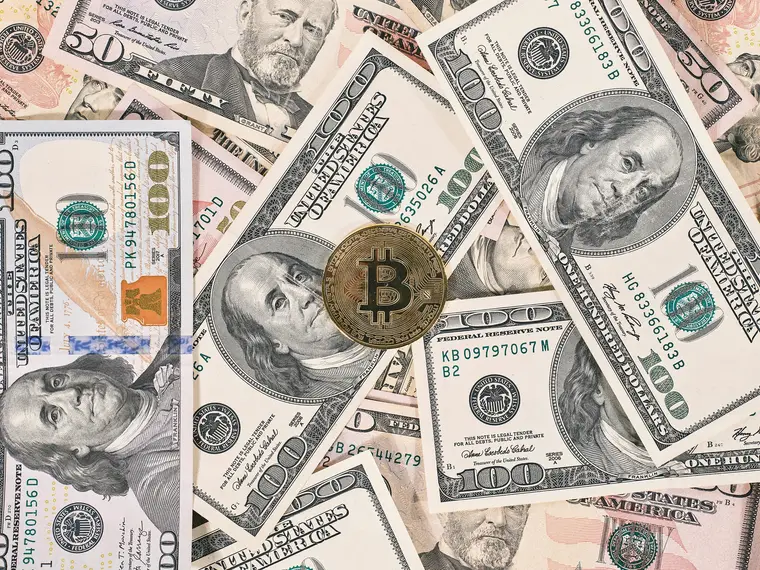 Two different objects
 What the coin gives you
The market never closes. Nights, weekends, holidays. You can act on news at the moment it happens rather than at 9.30 the next working morning. If you have ever wanted to buy a sharp weekend drawdown, this is the difference between doing it and reading about it.
You can withdraw it to a wallet you control. That is the whole proposition of the asset, and no fund replicates it. Coins in your own custody cannot be frozen by an intermediary, cannot be caught up in a broker's insolvency, and do not depend on a custodian's internal controls. They depend on yours instead, which is the trade.
You can spend it or send it. Payments, transfers, moving value across a border at the speed of a block. An ETF share does none of these things.
There is no annual percentage on your holdings. You pay a trading fee when you transact and then nothing recurring for simply owning it. Over a long holding period this is the single largest financial difference between the two routes, and we do the arithmetic below rather than asserting it.
No wash sale restriction, for now. Because bitcoin is property rather than a security, the §1091 window does not apply to it as of September 2026. You can realise a loss and re-establish the position immediately. That is a real, quantifiable advantage in a volatile asset — and it is a rule that Congress has repeatedly considered changing, so treat it as a current fact rather than a permanent one.
If withdrawal is the feature you want, no fund provides it.An ETF share settles in dollars through a broker. Coins you buy on an exchange can be moved to a wallet you hold the keys to.
Start buyingWhat the coin asks of you in return
Key management becomes your job. Seed phrases, backups, a plan for what happens if you are hit by a bus. Done properly it is not difficult, but "done properly" is doing real work in that sentence, and the failure is permanent rather than recoverable.
There is no SIPC and no FDIC protection at all. None. Crypto held on an exchange is neither. If a platform fails, customers are typically general unsecured creditors in the bankruptcy, standing behind secured lenders and waiting years for a partial distribution. This is the honest counterweight to the regulated-perimeter argument above, and it is why the venue you choose and how long you leave assets sitting on it both matter. Our guide to where to buy crypto compares the venue types.
The record-keeping is yours. Every disposal is a taxable event under Notice 2014-21 — including crypto-to-crypto swaps and spending it on something. Form 1099-DA now reports gross proceeds for transactions from 1 January 2025 and basis on certain transactions from 1 January 2026, which helps, but box 1g may be blank for anything you acquired earlier. If you have traded across several venues over several years, reconstructing basis is genuinely unpleasant work.
Retirement accounts are largely closed to you. Without a specialist self-directed IRA, the coin cannot live in the tax-sheltered part of your balance sheet. For many people that is where most of their long-term money already is.
The comparison in one table
| What you are comparing | Spot Bitcoin ETF | Bitcoin you hold | Who this favours |
|---|---|---|---|
| Ongoing cost | 0.14%–1.50% a year on the whole balance | A one-off fee on each transaction | Long holding periods favour the coin |
| Trading hours | US market hours only | Continuous, including weekends | Anyone who wants to act on news |
| Withdrawal and spending | Not possible — cash sale only | Send, spend or self-custody at will | The coin, decisively |
| Account protection | SIPC to $500,000 ($250,000 cash), not against price falls | No SIPC, no FDIC; unsecured creditor if a platform fails | The ETF, if the venue is the worry |
| Retirement accounts | IRA, Roth and many 401(k) plans | Specialist self-directed IRA only | The ETF, decisively |
| Loss harvesting | Wash sale rule applies (§1091) | Wash sale rule does not apply | The coin, in taxable accounts |
| Who holds the asset | A qualified custodian — mostly one of them | You, or a venue you chose | Depends on which risk you fear |
The cost arithmetic, done fairly
The structural difference is simple. An ETF charges a percentage of your holdings every year, forever. An exchange charges a fee on the transaction, once. Those are different shapes, and over a long holding period the recurring shape usually wins the argument.
Put numbers on it. Take a $25,000 position in a fund charging 0.25%. That is roughly $63 in the first year — trivial. But it is charged every year, on whatever the position is worth at the time, which means it grows as your position grows. Held flat for ten years it is about $625 in total. If the position tripled over that decade, the fee tracked it up the whole way, and the cumulative charge is materially larger than the flat-balance figure suggests. Now run the same exercise at 1.50%, which is what Grayscale's GBTC charges: roughly $375 in year one on the same $25,000, against $35 for the cheapest fund in the category. Grayscale has watched about $17.5bn leave that fund since it converted, and shed something like 447,000 bitcoin, which tells you the market has done this arithmetic too.
Against that, a purchase on an exchange costs you a trading fee once, at the point of transaction, and then nothing recurring. Ten years later you are still paying nothing to hold it.
But do not overstate the case, because the fee buys something. The sponsor fee pays for cold-storage custody with a qualified custodian, insurance arrangements, an annual audit, daily net asset value calculation, Exchange Act reporting on Form 10-K and 10-Q, a transfer agent and the listing itself. If you self-custody, you are not getting that for free — you are doing it yourself, and your time and your risk of error are real costs that never show up on a fee table. For a large position held for a long time the coin is cheaper. For someone who does not want to think about backups and inheritance planning, 25 basis points a year is a reasonable price for not having to.
What we would actually watch
The cost comparison flips depending on how you contribute, not just how long you hold. Someone buying once and holding for a decade should weigh the recurring fee heavily — it is charged roughly 3,650 times and the spread is crossed twice. Someone contributing every month crosses a spread twelve times a year in either wrapper, and at that frequency the difference between a 0.03% fund and a 0.11% fund starts to rival the difference between a 0.15% fee and a 0.25% fee. Before you decide the coin is cheaper, look honestly at your own behaviour over the last three years rather than the behaviour you intend to have.
Tax, wash sales, and a myth worth dropping
Two things are worth stating plainly here, and one thing is worth un-stating.
First, the wash sale asymmetry described above is real and it favours the coin in taxable accounts. Second, the ETF's consolidated reporting genuinely reduces friction, and the trust's own bitcoin sales to cover its fee pass small annual gains through to you whether you like it or not.
Third — and this is the one to unlearn — bitcoin ETFs are not taxed at the 28% collectibles rate. The claim is everywhere and it is simply wrong. Section 408(m)(2) lists what a collectible is: art, rugs and antiques, any metal or gem, stamps and coins, alcoholic beverages, and other tangible personal property specified by the Secretary. Every category is tangible personal property. Gold ETFs are caught because bullion is literally "any metal". Bitcoin is intangible and fits nothing on that list, no IRS ruling treats it or its ETPs as collectibles, and Grayscale's FY2025 10-K for GBTC contains no occurrence of "collectible" or "28%" — its tax section describes ordinary short and long-term capital gain treatment. The accurate framing is that the IRS has not issued ETP-specific rate guidance, but the statutory text points clearly the other way and issuers uniformly take the ordinary long-term capital gains position. Our Bitcoin ETF tax guide goes through it properly.
The answer for a lot of people is both
Here is what we would actually do, and it is not a fudge. Put the fund inside the tax-sheltered account and the coin outside it.
Inside an IRA, a Roth IRA or a 401(k), the wrapper earns its fee outright. It is the only way to get the exposure into that account without a specialist custodian, the tax-reporting advantage is irrelevant because nothing is reported, the wash sale disadvantage is irrelevant because you cannot harvest losses in a sheltered account anyway, and you never have to think about key management for that slice. Every disadvantage of the ETF either disappears or stops mattering inside a retirement wrapper. Pick a cheap fund with real size — our picks by investor situation work through which — and leave it alone.
Outside it, in ordinary taxable money, the case tilts the other way. No annual percentage on the balance, the ability to harvest losses without the §1091 window, access at the weekend, and coins you can actually withdraw and hold. That is where the properties of the asset are worth having, and where the fund's fee is buying you the least.
The split also hedges the thing neither route fixes. If you hold only the fund, you are exposed to a custody concentration you did not choose — roughly 80.8% of all ETF-held bitcoin sits with Coinbase Custody. If you hold only coins, you are exposed to your own operational discipline. Holding both means neither single failure takes the whole position with it. That is not a compromise; it is diversification of the failure modes, which is the only kind of diversification available when the underlying asset is identical.
How to decide in five minutes
-
Ask where the money currently lives
If it is inside an IRA or a 401(k), the decision is already made: buy the fund. If it is ordinary taxable cash, keep going.
-
Ask whether you will ever want to move it off-platform
Send it, spend it, hold your own keys, use it as collateral somewhere. If yes at any point, the fund cannot do it and the question is closed.
-
Be honest about key management
Will you actually write down a seed phrase, store it in two places, and tell someone in your will where it is? If the honest answer is no, the fund's fee is buying you real protection against your own admin.
-
Check your holding period against the fee
One year and a percentage fee is noise. Fifteen years and it is the largest single cost you will pay. The fee page has the full comparison.
-
Then split, rather than choose
Fund in the sheltered account, coin outside it. For most people this beats picking a winner, and neither decision has to be permanent.
If you have landed on the fund, the mechanics of buying one — account, order type, timing — are at how to buy a Bitcoin ETF, and the broker comparison is at Bitcoin ETF brokers. If you have landed on the coin, start with how to buy bitcoin. If you are still unsure what the fund structurally is, read what a Bitcoin ETF actually is first — these are grantor trusts under the Securities Act of 1933, not 1940 Act funds, and that distinction changes which protections you get.
Questions people actually ask about this choice
Is a Bitcoin ETF safer than owning bitcoin?
Can I hold bitcoin in an IRA or a 401(k)?
Does the wash sale rule apply to Bitcoin ETFs?
Do Bitcoin ETFs get taxed at the 28% collectibles rate?
Can I convert a Bitcoin ETF holding into actual bitcoin?
Sheltered account gets the fund. The rest of it does not have to.
If the argument above landed on coins you can withdraw, hold and move on your own schedule, the account takes a few minutes to open and the asset is yours the moment it settles.
A regulated venue trading since 2013, registered with FinCEN as a money services business and licensed in the EU and UK.